
Export Documents Checklist: Everything US Exporters Need
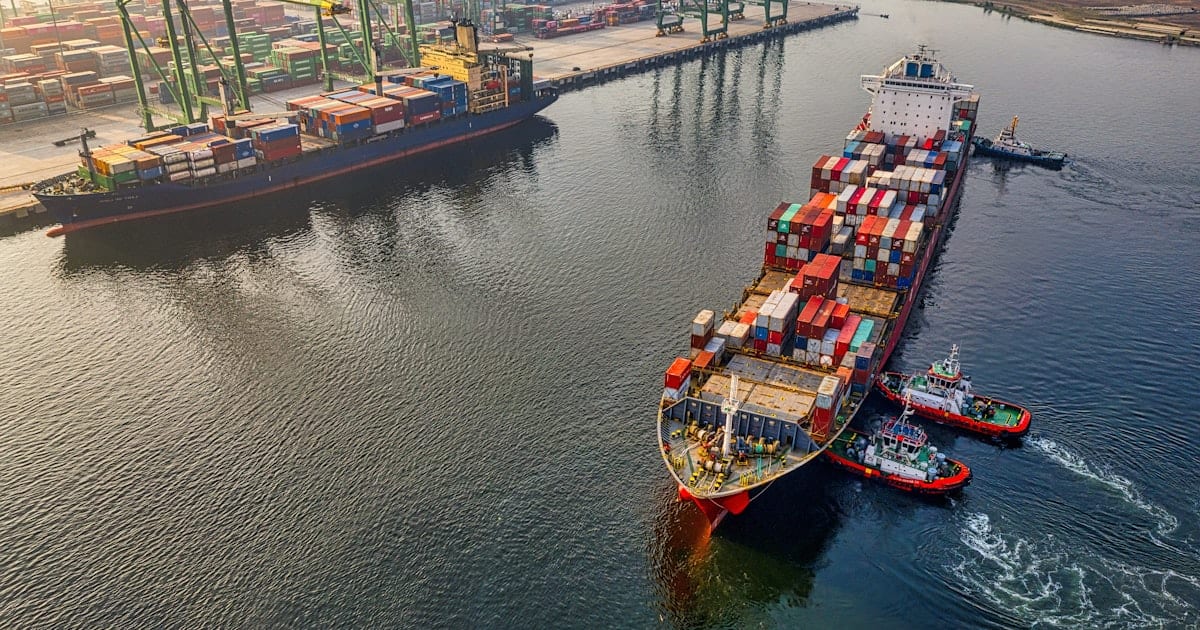
To export from the United States you need three core commercial documents — a commercial invoice, a packing list, and a transport document (a bill of lading or air waybill) — plus a certificate of origin and whatever product-specific certificates your buyer’s country requires.
That is the short answer. The full answer depends on what you ship, where it lands, and what the importer’s customs authority asks for — and getting it wrong is the fastest way to leave a container sitting at the port. This guide is a plain-English checklist of every document a US food, beverage, or consumer-product exporter is likely to touch, grouped so you can see which ones apply to your shipment. For each, you get a one-line “what it is and when you need it,” plus a link down to a deeper guide where we have one.
It is written for both sides of the trade: exporters preparing a first international order, and international buyers and distributors who want to know exactly what to ask a US supplier for before goods move. If you are still choosing who to buy from, our guide to how international buyers vet American wholesale suppliers covers which route into US supply produces these documents most easily.
How to use this checklist
Export paperwork falls into four buckets:
- Commercial documents — what was sold, and for how much.
- Transport documents — how the goods move and change hands.
- Origin and customs documents — what clears the border and sets the duty.
- Compliance and product certificates — proof the product is what you say it is and is legal to sell.
No single shipment needs all of them. A pallet of shelf-stable snacks bound for the UK and a refrigerated container of supplements bound for the UAE carry very different document stacks. Two rules hold in every case: your commercial invoice, packing list, and transport document must agree with each other to the letter, and the importing country — not the US — sets most of the special requirements. Always confirm the exact list with your buyer, your freight forwarder, and the destination customs authority before you ship. For a broader orientation, our overview of international export and import documentation is a good companion.
Commercial documents: what you sold
Commercial invoice
What it is: the bill for the goods from seller to buyer, and the single most important export document. Customs officials in the buyer’s country use it to assess import duties and taxes, so it must state the goods, quantities, value, currency, and the parties to the sale. According to trade.gov’s commercial-invoice guidance, it is required for both export and import clearance. When you need it: every commercial shipment. Get the value and product description right — this is the figure customs works from. See our commercial invoice guide.
Packing list
What it is: an itemized inventory of every box, carton, pallet, or drum — with quantities, descriptions, net and gross weights, dimensions, and package marks. Freight forwarders use it to calculate weights and freight costs; US and foreign customs use it to check the contents of a specific package, per trade.gov on packing lists. When you need it: every physical shipment. Details in our packing list guide.
Pro forma invoice
What it is: a preliminary invoice sent before the sale is final — a formal quote stating prices, product specifications, and terms so the buyer can arrange financing, open a letter of credit, or apply for an import permit. When you need it: at the negotiation stage, before the commercial invoice exists.
Transport documents: moving the goods
Bill of lading (ocean freight)
What it is: the contract between the owner of the goods and the ocean carrier, and often the document of title. Per trade.gov’s common export documents, it comes in two forms — a straight bill of lading (non-negotiable) and a negotiable “shipper’s order” bill of lading that can be bought, sold, or traded while the goods are in transit — and the buyer usually needs an original as proof of ownership to take possession. When you need it: any ocean shipment.
Air waybill
What it is: the air-freight equivalent of a bill of lading. It accompanies goods moving by international air carrier and carries the tracking information; unlike an ocean bill of lading, an air waybill is always non-negotiable. When you need it: any air shipment.
Shipper’s letter of instruction (SLI)
What it is: your written instructions to the freight forwarder, authorizing them to move the shipment and, often, to file your export data on your behalf. It carries the shipment details the forwarder needs — including your proof-of-filing number, so customs can verify the export. When you need it: whenever a forwarder handles your export. See the shipper’s letter of instruction guide.
Origin and customs documents: clearing the border
Certificate of origin
What it is: a signed statement of where the goods were made — not where they shipped from. A generic certificate of origin is often validated by a chamber of commerce; a preferential one lets qualifying goods enter duty-free under a free-trade agreement. Note the modern rule: USMCA, which replaced NAFTA on July 1, 2020, requires no specific form — just nine data elements that can appear on the invoice or any document. When you need it: when the destination requires proof of origin, or when you are claiming a preferential tariff. Our certificate of origin guide walks the nine USMCA elements; a lighter statement of origin covers non-preferential cases.
Electronic Export Information (EEI) and your HS / Schedule B code
What it is: the export data US exporters file electronically through the Automated Export System (AES). Per trade.gov on EEI filing, you must file EEI when the value of goods under a single Schedule B number exceeds $2,500 to destinations other than Canada, or when an export license is required. Filing returns an Internal Transaction Number (ITN) that goes on your bill of lading and shipper’s letter of instruction as proof. Every product also needs its Schedule B / Harmonized System (HS) code — the classification number that drives your duty rate and your filing. When you need it: most commercial shipments over $2,500 per code; below that, you annotate the documents with an exemption citation instead.
Destination control statement (DCS)
What it is: a short legal notation on the commercial invoice and transport documents stating that the goods are being exported from the US under the Export Administration Regulations and may not be diverted contrary to US law. When you need it: on controlled items — though many exporters include it as standard practice.
Export license
What it is: a government authorization to export specific goods, in specific quantities, to a specific destination. Most food and everyday consumer goods need no license; controlled items, restricted destinations, and sanctioned parties do. When you need it: only when the item, destination, or end user is controlled — check before you assume you are clear.
Compliance and product certificates: proving the product
This is where requirements diverge most by product and country. Ship only the certificates your buyer’s market actually asks for.
Certificate of free sale
What it is: an official document showing that a product is legally sold, freely and without restriction, in its home market — foreign governments request it to confirm a product already trades in the US. For dietary supplements, medical foods, and foods for special dietary use, the FDA issues the Certificate of Free Sale; for conventional foods it issues a Certificate to a Foreign Government or Certificate of Exportability instead. Per the FDA, the Certificate of Free Sale carries no fee and expires two years from issuance (the conventional-food certificates carry a per-certificate fee). When you need it: very commonly for food, supplements, and cosmetics — especially in the Middle East and Latin America. Full detail in our certificate of free sale guide.
Certificate of manufacture
What it is: a signed statement from the producer that the goods have been manufactured and fulfil the order — used when payment terms trigger on completion rather than shipment, or when an importer wants evidence that a US facility actually made the product. When you need it: when a buyer, bank, or customs authority asks for producer confirmation. (The exact scope of a “certificate of manufacture” varies by buyer and country — confirm what your importer means by it.) Grovara’s manufacturing certificate guide covers the version buyers on the platform request.
Phytosanitary certificate
What it is: a certificate — issued in the US by USDA APHIS on PPQ Form 577 — attesting that plants or plant products have been inspected, are free of regulated pests, and meet the importing country’s phytosanitary requirements. When you need it: for plant-based agricultural goods (fresh produce, seeds, grains, some botanicals) when the destination requires it. Many processed, shelf-stable foods do not, in which case a phytosanitary exemption letter can document why.
Health, sanitary, and veterinary certificates
What it is: government-issued certificates attesting that a product is fit for human — or animal — consumption. For US meat, poultry, and egg products these come from USDA FSIS; other agencies cover other categories. When you need it: for animal-origin and many perishable foods, depending on the destination’s import rules. (Issuing agency and format vary by product — verify the exact certificate with your buyer and the destination authority.)
Certificate of analysis and certificate of inspection
What they are: a certificate of analysis (COA) reports lab-test results — composition, purity, contaminants, microbiological limits — for a specific batch; a certificate of inspection attests that goods were inspected and met the agreed standard before shipment. When you need them: when the buyer or destination requires proof of quality or a pre-shipment check. See our certificate of analysis and certificate of inspection guides. Related batch documents include a heavy metal statement and a pasteurization exemption letter.
Dietary and religious product certificates
What they are: third-party certifications that verify a product claim — organic, gluten-free, non-GMO, halal, and kosher among them. When you need them: when the claim is on your label or the market expects it — halal is effectively mandatory across much of the Middle East and Southeast Asia, and a product must be certified organic to be labeled as such.
Partner and market-access documents
Distribution authorization letter
What it is: a brand-signed letter naming a company as an authorized distributor, usually for a defined territory and term. It gives your distributor standing to register products, clear customs, and sell on your behalf — and in agency-law markets it is often required to prove the relationship exists. When you need it: whenever you appoint an international distributor. Read our distribution authorization letter guide before you sign — and, if you are still looking for the partner, our hub on US companies looking for distributors.
How Grovara generates your export documents
Export paperwork rarely stalls a first shipment because of any single form. It stalls on coordination: matching the invoice to the packing list to the transport document, producing the right certificate for the right market, and doing it all again for every reorder. Grovara handles that inside the order flow. Scout AI™ auto-generates the compliance documents each order needs, so the paperwork is produced as you trade rather than chased after the fact — alongside payments, logistics, and reorders on one platform. Brands and buyers — 10K+ of them across 60+ countries — transact in a closed, vetted ecosystem, so the partner on the other side is verified before a single document changes hands.
The export documents checklist, in one place
Confirm the exact set with your buyer, your forwarder, and the destination customs authority — but this is the working list:
- Commercial invoice — the bill and the customs value.
- Packing list — itemized contents and weights.
- Pro forma invoice — the pre-sale quote.
- Bill of lading / air waybill — the transport contract and title.
- Shipper’s letter of instruction — instructions to your forwarder.
- Certificate of origin — where the goods were made; duty preference.
- EEI / AES filing + Schedule B (HS) code — required over $2,500 per code.
- Destination control statement — the export-control notation.
- Export license — only for controlled items or destinations.
- Certificate of free sale — proof the product is legally sold in the US.
- Certificate of manufacture — producer confirmation of manufacture.
- Phytosanitary certificate — pest-free proof for plant products.
- Health / sanitary certificate — fitness for consumption.
- Certificate of analysis / inspection — batch and pre-shipment quality.
- Dietary and religious certificates — organic, gluten-free, non-GMO, halal, kosher.
- Distribution authorization letter — your distributor’s mandate.
Whether you are a US exporter preparing a first international order or a buyer sourcing an export-ready supplier, you can trade with the documents handled for you: create your Grovara account and start selling or sourcing with vetted partners.
Frequently asked questions
What documents do I need to export from the US?
At minimum: a commercial invoice, a packing list, and a transport document (bill of lading or air waybill). Most shipments add a certificate of origin, an Electronic Export Information (EEI) filing when the value exceeds $2,500 per Schedule B code, and any product-specific certificates the destination requires — such as a certificate of free sale or a phytosanitary certificate.
What is the difference between a certificate of free sale and a certificate of origin?
A certificate of origin proves where the goods were made, and can unlock a preferential (often duty-free) tariff under a trade agreement. A certificate of free sale proves the product is legally sold in its home market — foreign governments request it to confirm a US product is already on sale there. They answer different questions, and many shipments need both.
Do I always need a certificate of origin to export?
No. You need one when the destination country requires proof of origin, or when you are claiming a preferential tariff under a free-trade agreement. Under USMCA there is no set form — just nine data elements that can appear on the commercial invoice or any document. Where no preference is claimed, a lighter statement of origin often suffices.
When do I have to file EEI in the Automated Export System?
You must file Electronic Export Information through AES when the value of goods under a single Schedule B number exceeds $2,500 to destinations other than Canada, or whenever an export license is required. Below that threshold you annotate your documents with an AES exemption citation instead. Filing returns an ITN that goes on your bill of lading and shipper’s letter of instruction.
What is a certificate of manufacture?
A signed statement from the producer confirming that the goods have been manufactured and fulfil the order. It is sometimes used when payment terms trigger on completion rather than shipment, and sometimes requested by an importer as evidence that a US facility actually made the product. Its exact scope varies by buyer and country, so confirm what your importer means by it before issuing one.
Do I need a phytosanitary certificate to export food?
Only for plant-based agricultural goods — fresh produce, seeds, grains, and some botanicals — when the destination requires it. USDA APHIS issues it in the US on PPQ Form 577, certifying the goods are pest-free and meet the importing country’s rules. Many processed, shelf-stable foods do not need one; a phytosanitary exemption letter can document why.
Which export documents are required by law and which are requested by the buyer?
US law drives the customs stack — the commercial invoice, EEI/AES filing over the value threshold, and an export license for controlled items. Most product certificates (free sale, phytosanitary, health, halal, analysis) are set by the importing country or requested by your buyer or their bank. Always confirm the full list with your buyer, your freight forwarder, and the destination customs authority before you ship.
Sources
- trade.gov — Common Export Documents (opens in new tab)
- trade.gov — Commercial Invoice (opens in new tab)
- trade.gov — Packing List (opens in new tab)
- trade.gov — Electronic Export Information (EEI) (opens in new tab)
- US Customs and Border Protection — USMCA Frequently Asked Questions (opens in new tab)
- US Food and Drug Administration — Food Export Certificates (opens in new tab)
- USDA APHIS — Plant and Plant Product Export Certificates (opens in new tab)