
How to Buy Wholesale GPUs and Compute Hardware
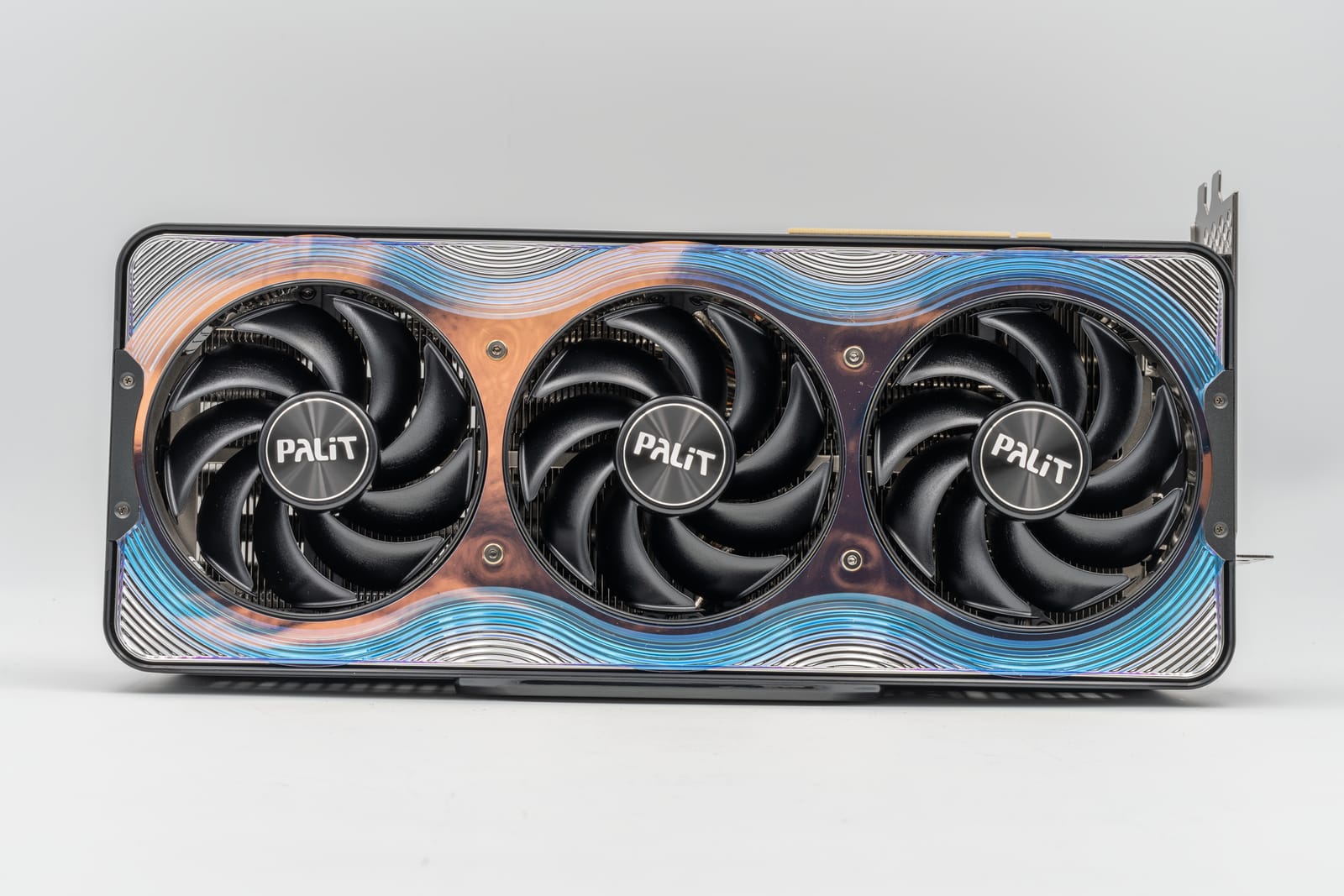
In September 2026, PC Gamer reported that the RTX 5090 had disappeared from most major U.S. retailers. Third-party sellers were asking far more than list price. That is NVIDIA's flagship gaming card, and it was also scarce at its 2025 launch (TechSpot). When a flagship GPU is that scarce, where a store buys it decides both its margin and its risk of getting a fake.
Grovara has just started to list compute hardware. It lists two items from one seller: an ASUS ROG Astral GeForce RTX 5090 card and a Samsung 96GB server memory module.
How to buy wholesale GPUs and compute hardware
To buy GPUs wholesale, open a business account with an authorized distributor or a vetted wholesale marketplace. Show proof that you resell. Then buy stock whose condition, origin, warranty terms and serial numbers the seller confirms in writing. If the hardware leaves the United States, check the export rules first. A high-end card like the RTX 5090 is export-controlled, and some destinations need a U.S. license.
A GPU (graphics processing unit) is the chip that renders graphics and runs artificial intelligence (AI) workloads. Most buyers mean the whole graphics card when they say GPU. Wholesale buyers include retailers, system integrators, information technology (IT) resellers and small AI teams.
The hardware classes a wholesale buyer meets
Consumer and gaming cards
NVIDIA designs the GeForce chip. It sells most of those chips to add-in card (AIC) partners such as ASUS, Gigabyte, Palit and PNY. Each AIC partner builds its own board and cooler around the chip, then sells the finished cards through distributors. PNY's U.S. dealer page, for example, names ASI and Ingram Micro among its authorized distribution partners (PNY: where to buy). Distributors then sell to resellers and system integrators.
Allocation is how distributors ration scarce cards. When a flagship card launches, demand runs far ahead of supply. Each distributor decides how much each account receives, and small new accounts get little. In March 2025, system integrator PowerGPU said distributors were offering it RTX 5090 cards at $3,050 to over $3,100 (TechSpot). NVIDIA's list price was $1,999.
Workstation and professional cards
Workstation cards go into professional desktops. NVIDIA's RTX PRO 6000 Blackwell has 96 GB of GDDR7 memory with error-correcting code (ECC). Its maximum power draw is 600 W (NVIDIA RTX PRO 6000 specifications). ECC detects and corrects memory errors. NVIDIA's page points buyers to the NVIDIA Marketplace or to an NVIDIA partner. Ask each seller which company built the card and who honors its warranty.
Data-center accelerators
Data-center GPUs are built for servers. NVIDIA's H200 has 141 GB of HBM3e, a stacked high-bandwidth memory (NVIDIA H200). NVIDIA sells its server-module version in partner HGX systems with four or eight GPUs. The PCI Express (PCIe) card version goes into partner servers with up to eight GPUs. Most buyers get them inside a complete server.
Export rules treat this class most strictly. The license exceptions covered below exclude items designed or marketed for data centers that meet export classification 3A090.a. The test reads "designed or marketed," so a product's marketing counts as well as its design. NVIDIA markets its RTX PRO 6000 Blackwell Server Edition to "accelerate enterprise data center workloads" (NVIDIA). Ask the seller how the maker markets each model you plan to export.
Server memory and other server parts
A registered dual in-line memory module (RDIMM) is the standard memory stick in servers. Samsung says its RDIMMs use a register to buffer command and control signals, which improves signal integrity on server platforms. Samsung also says all server RDIMMs include ECC by default. It lists DDR5 (fifth-generation double data rate) RDIMMs at up to 256 GB per module, running at 1.1 V (Samsung RDIMM).
Memory prices swing hard. Tom's Hardware reported in late 2025 that server DRAM (dynamic random-access memory) prices had risen up to 50%. U.S. and Chinese hyperscalers, the largest cloud operators, were getting about 70% of what they ordered (Tom's Hardware). Before you order, check each module against the server maker's list of supported memory.
How channel, allocation, warranty and export rules differ
| Class | Example | How it is sold | Check before you buy |
|---|---|---|---|
| Gaming card | GeForce RTX 5090 | AIC partner to distributor to reseller, rationed by allocation at launch | Warranty region and serial numbers |
| Workstation card | RTX PRO 6000 Blackwell | NVIDIA Marketplace or an NVIDIA partner | Which company honors the warranty |
| Data-center accelerator | H200 | Inside partner servers with four or eight GPUs | Export eligibility, under the strictest rules below |
| Server memory | Samsung DDR5 RDIMM | By the module or the master case | The server maker's supported-memory list |
A wholesale marketplace sits beside these routes. It connects you to vetted sellers, so you do not apply to each distributor one at a time. For a new buyer without distributor credit, it is often the faster way in.
Minimum orders and carton counts
Graphics cards ship one per retail box. A master carton holds several boxes, and the count varies by brand and model. A minimum order quantity (MOQ) is the smallest order a seller accepts. Ask each seller for the MOQ and units per carton before you plan freight. The Samsung RDIMM listing on Grovara gives 100 units per master case.
Flagship cards are large. ASUS lists the ROG Astral RTX 5090 OC at 357.6 x 149.3 x 76 mm and 3.8 slots wide. ASUS recommends a 1000 W power supply (ASUS specifications). The Grovara listing gives the same dimensions and a unit weight of 6.6 lb.
Export controls on GPUs and compute hardware
U.S. export rules follow the hardware after it leaves the country. They apply to the seller that exports it, and to anyone who re-exports it later. The RTX 5090 is the worked example below. Ask the seller for the classification of every item in writing, memory included.
Which classification applies
The Bureau of Industry and Security (BIS) at the U.S. Department of Commerce writes the Export Administration Regulations (EAR). Every controlled item has an Export Control Classification Number (ECCN). ECCN 3A090 covers advanced computing chips. ECCN 4A090 covers computers, electronic assemblies and components that contain those chips (15 CFR part 774, supplement no. 1).
A chip falls under 3A090.a when its total processing performance (TPP) is 4,800 or more. It also qualifies at a TPP of 1,600 or more with a performance density of 5.92 or more. NVIDIA rates the RTX 5090 at 3,352 AI TOPS, or trillions of AI operations per second (NVIDIA RTX 5090 specifications). AI TOPS and TPP are different measures, and NVIDIA's product page gives no TPP figure. NVIDIA built a separate RTX 5090 D for China with 2,375 AI TOPS. Tom's Hardware reported its TPP at about 4,750, just under the 4,800 line (Tom's Hardware).
A federal indictment filed on Sept. 29, 2026, states that GeForce RTX 5090 GPUs are classified under ECCN 4A090.a (indictment, United States v. Lui). The Justice Department alleges that the defendant shipped servers containing GPUs to China through Malaysia and Singapore without the required licenses (U.S. Department of Justice). These are charges, and the defendant is presumed innocent. The case still shows how U.S. prosecutors classify the card.
Where a license is needed
The October 2023 advanced computing rule set a license requirement for 3A090 and 4A090 items to Country Groups D:1, D:4 and D:5 (88 FR 73458). Destinations also in Country Groups A:5 or A:6 are excluded. Country Group D:5 includes China. BIS repeats that scope in its May 2025 guidance to industry (BIS counter-diversion guidance).
A second rule follows the buyer's headquarters. These items need a license when the buyer is headquartered in Macau or a D:5 country such as China, wherever the buyer is located. The rule also covers a buyer whose ultimate parent is headquartered there. BIS confirmed this in guidance dated May 31, 2026, under 15 CFR 742.6(a)(6)(iii)(A) (BIS guidance, May 31, 2026). BIS does not enforce the broader worldwide requirement that the January 2025 AI Diffusion rule added. The Commerce Department announced in May 2025 that it would rescind that rule (BIS press release).
Country-wide sanctions are a separate layer. Part 746 of the EAR sets its own controls for destinations that include Cuba, Iran, North Korea, Russia and Belarus (15 CFR part 746).
Gaming cards and License Exceptions NAC and ACA
A gaming card may qualify for a license exception in place of a license. License Exceptions NAC (Notified Advanced Computing) and ACA (Advanced Computing Authorized) cover most 3A090 and 4A090 items. They exclude items that meet 3A090.a and are designed or marketed for data centers (15 CFR 740.8). ACA covers most destinations. NAC covers Macau, D:5 countries and companies headquartered in them. Both require a written purchase order before export. Under NAC, the exporter must notify BIS at least 25 calendar days before shipping, and BIS can answer that a full license is needed. Neither exception applies when part 744 or 746 of the EAR requires a license, such as for a party on the Entity List. NVIDIA built the reduced RTX 5090 D for the Chinese market.
End-use and end-user screening
The exporter also needs to know who receives the hardware and what it is for. In practice, that means screening every party against the U.S. government's Consolidated Screening List, which includes the BIS Entity List. BIS lists red flags for AI chip diversion. One is a buyer that will not say where its parent company is based (BIS red flags). Expect a careful seller to ask for an end-user statement.
Confirm each item's classification and your destination with BIS or an export compliance attorney before you order. Rules in this area changed several times between 2023 and 2026. GroDega, Grovara's show, covered this in Ep. 11, "The BIS Crackdown: What Exporters Need To Know" (GroDega podcast). For the rest of the paperwork, see every document you need to export from the US.
HS codes and import duty
Customs uses the Harmonized System (HS) to classify goods and set duty. In ruling N352984 (Sept. 17, 2025), U.S. Customs and Border Protection placed an external RTX 5090 unit under 8473.30.5100 of the U.S. tariff schedule (HTSUS). That line covers parts and accessories of computers (CBP ruling N352984). An internal card can classify differently, and every country applies its own tariff lines. Confirm the code for each product with a licensed customs broker in the import country.
Value-added tax (VAT) and freight often add more to the import bill than duty does. The free Landed Cost Estimator on every Grovara product page estimates the full delivered cost by destination, and it needs no account. Some import markets also ask for proof of origin, so keep a certificate of origin with the shipment.
New and re-certified hardware
Secondary hardware has had an earlier owner or has left its first sales channel. Sellers label it open box, refurbished, re-certified or used. Ask the seller to define each label it uses, in writing. Warranty is where the labels matter most. The ASUS International Warranty says refurbished or reconditioned units may get only the warranty that their sales channel offers (ASUS International Warranty). The same warranty does not list graphics cards at all, so ask which region each card was built for.
For re-certified GPUs or memory, ask for these documents:
- A condition grade for each unit, with the date it was tested.
- The tests run, such as a full-load stress test, and the result for each serial number.
- Any repairs made and the parts replaced.
- Who honors the warranty, and for how long.
Re-certified stock can suit a small AI team that values memory size over a factory seal. Check that the paperwork matches the serial numbers on arrival.
How to vet a GPU supplier and avoid fakes
Scarce cards attract fraud. In September 2026, Tom's Hardware reported two German buyers who paid for "hollow" RTX 5090 cards. The GPU chip and memory had been removed (Tom's Hardware). In April 2026, the repair shop Northwest Repair found an RTX 4090 with a shaved GPU core and memory, laser-etched with fake markings (Tom's Hardware). Neither fake was visible from the outside.
Defects happen on genuine stock too. NVIDIA confirmed that less than 0.5% of RTX 5090 and RTX 5070 Ti GPUs shipped one ROP (render output unit) short. NVIDIA told owners to contact the board maker for a replacement (Tom's Hardware). That route works only when you can prove where the card came from.
Before you pay a new supplier, ask for these:
- A business invoice that names the seller and shows where it bought the hardware.
- Serial numbers before shipment, so you can match them to the boxes on arrival.
- The region each card was built for, and who honors the warranty.
- Payment through a traceable business channel, with no gift cards or crypto-only terms.
Test each card or module in a working system before you accept the shipment. In the German case, the buyer met the seller in person but had no system to test the card.
The margin reality
Scarcity drives margins on GPUs and memory alike. The RTX 5090 sold above list price in March 2025 and again in September 2026, per the TechSpot and PC Gamer reports above. Prices can fall fast when supply catches up or a newer model ships. Buy in quantities you can sell within one product cycle. Price against your full landed cost, warranty returns included.
Some demand comes from outside gaming. PC Gamer suggested in September 2026 that AI firms may be buying high-end consumer cards for servers. Those buyers ask about memory size and power draw more than frame rates.
What Grovara lists today
Grovara is a global wholesale marketplace that connects 10K+ brands and buyers across 60+ countries. Compute hardware is new on the platform. Both current listings come from one seller, HyperCycle Technologies. Its Grovara profile says it "re-certifies, repairs, integrates and resells secondary and leading-edge AI hardware." Both listings mark their items as new and sell to business buyers only.
- The ASUS ROG Astral GeForce RTX 5090 32GB GDDR7 OC Edition, in the graphics cards category.
- The Samsung 96GB DDR5-6400 ECC RDIMM, in the electronics category. Its listed origin is Vietnam.
The seller also handles secondary hardware, so confirm each unit's condition before you order.
- Register as a buyer. Create a buyer account on the Grovara marketplace. Membership is $495 a year for brands and buyers alike, and buyers get their first 180 days free.
- Find the hardware. Open a listing above or browse the categories. Scout AI, Grovara's AI copilot, also takes plain-language searches.
- Ask the seller. Use in-platform chat to confirm condition, warranty region, serial numbers and MOQ.
- Estimate the landed cost. Run the Landed Cost Estimator on the product page for your destination.
- Confirm export eligibility. Check your destination and end use against the export rules above with BIS or an export compliance attorney. Grovara generates compliance documents automatically for each order. Export licenses and party screening remain the exporter's job.
Who wholesale GPU buying fits
It fits a reseller or integrator with customers for high-end hardware and a way to test stock on arrival. If you are new to sourcing from the United States, read how international buyers source from American wholesale suppliers. To compare platforms, see wholesale marketplaces for international buyers.
Photo: PantheraLeo1359531 via Wikimedia Commons, CC BY 4.0.

Frequently asked questions
How do I buy GPUs wholesale?
Open a business account with an authorized distributor or a vetted wholesale marketplace, and show proof that you resell. Buy stock whose condition, origin, warranty terms and serial numbers the seller confirms in writing. Ask each seller for the minimum order quantity (MOQ) and units per carton. If the hardware leaves the United States, confirm export eligibility first.
Are GPUs export-controlled?
High-end ones are. A federal indictment filed in September 2026 states that GeForce RTX 5090 GPUs are classified under Export Control Classification Number (ECCN) 4A090.a (indictment, United States v. Lui). That class covers products containing a chip that meets ECCN 3A090.a. Exports to Country Groups D:1, D:4 and D:5 need a license from the U.S. Bureau of Industry and Security (BIS) or a license exception. So do exports to companies headquartered in Macau or a D:5 country. Data-center accelerators face the tightest rules. License Exceptions NAC (Notified Advanced Computing) and ACA (Advanced Computing Authorized) exclude items designed or marketed for data centers that meet ECCN 3A090.a. Confirm your case with BIS or an export compliance attorney.
Can I export an RTX 5090 or a data-center GPU to China?
China is in Country Group D:5. An RTX 5090 export to China needs a license from the U.S. Bureau of Industry and Security (BIS). The alternative is License Exception NAC (Notified Advanced Computing), if the shipment qualifies. NAC excludes items designed or marketed for data centers that meet ECCN 3A090.a, so it does not cover those accelerators. The exporter must notify BIS at least 25 calendar days before shipment, and BIS can respond that a license is needed (15 CFR 740.8). NVIDIA built a reduced RTX 5090 D for the Chinese market. Confirm your case with BIS or an export compliance attorney.
What is an RDIMM?
An RDIMM is a registered dual in-line memory module, the standard memory stick in servers. Samsung says its RDIMMs use a register to buffer command and control signals. It also says all server RDIMMs include error-correcting code (ECC) by default (Samsung). Check each module against the server maker's supported-memory list.
Is refurbished or re-certified GPU hardware safe to buy wholesale?
It can be, when the paperwork is complete. Ask for test results for each serial number and any repair history. Ask who honors the warranty and for how long. The ASUS International Warranty says refurbished or reconditioned units may get only the warranty their sales channel offers (ASUS). Test each unit on arrival.
Does Grovara sell GPUs and server hardware?
Grovara has just started to list compute hardware. It lists an ASUS ROG Astral GeForce RTX 5090 and a Samsung 96GB DDR5 RDIMM, both sold by HyperCycle Technologies. Registered buyers can chat with the seller in the platform. Anyone can run the free Landed Cost Estimator on the product page.
Sources
- NVIDIA — GeForce RTX 5090 specifications (opens in new tab)
- ASUS — ROG Astral GeForce RTX 5090 32GB GDDR7 OC Edition tech specs (opens in new tab)
- PNY — Where to buy (U.S. authorized distribution partners) (opens in new tab)
- TechSpot — Nvidia RTX 50 series supply woes extend to system builders (Mar. 16, 2025) (opens in new tab)
- PC Gamer — Where have all the RTX 5090s gone? (Sept. 16, 2026) (opens in new tab)
- NVIDIA — RTX PRO 6000 Blackwell workstation GPU specifications (opens in new tab)
- NVIDIA — H200 Tensor Core GPU specifications (opens in new tab)
- NVIDIA — RTX PRO 6000 Blackwell Server Edition (opens in new tab)
- Samsung Semiconductor — RDIMM (registered DIMM) overview and FAQ (opens in new tab)
- Tom's Hardware — Server DRAM prices surge up to 50% as AI-induced memory shortage hits hyperscaler supply (late 2025) (opens in new tab)
- eCFR — 15 CFR part 774, Commerce Control List (ECCNs 3A090, 4A090) (opens in new tab)
- Tom's Hardware — Nvidia cuts down the China-specific RTX 5090D AI TOPS (Jan. 7, 2025) (opens in new tab)
- U.S. District Court, C.D. Cal. — Indictment, United States v. Lui, No. 2:26-cr-00618 (filed Sept. 29, 2026) (opens in new tab)
- U.S. Department of Justice — California man arrested for smuggling export-controlled servers to China (opens in new tab)
- Federal Register — 88 FR 73458, advanced computing export controls (Oct. 25, 2023) (opens in new tab)
- BIS — Industry guidance to prevent diversion of advanced computing ICs (May 13, 2025) (opens in new tab)
- BIS — Guidance on license requirements for D:5- and Macau-headquartered entities (May 31, 2026) (opens in new tab)
- BIS — Rescission of the AI Diffusion rule (May 2025) (opens in new tab)
- eCFR — 15 CFR part 746, embargoes and other special controls (opens in new tab)
- eCFR — 15 CFR 740.8, License Exceptions NAC and ACA (opens in new tab)
- International Trade Administration — Consolidated Screening List (opens in new tab)
- U.S. CBP — Ruling N352984, external RTX 5090 unit (Sept. 17, 2025) (opens in new tab)
- ASUS — International Warranty and country coverage list (opens in new tab)
- Tom's Hardware — German scammer sells hollow RTX 5090 GPUs (Sept. 8, 2026) (opens in new tab)
- Tom's Hardware — RTX 4090 sent for repair is a sophisticated fake (Apr. 26, 2026) (opens in new tab)
- Tom's Hardware — Nvidia explains the missing ROPs (Feb. 22, 2025) (opens in new tab)